
Nazlı Öztürk
İstanbul, Türkiye
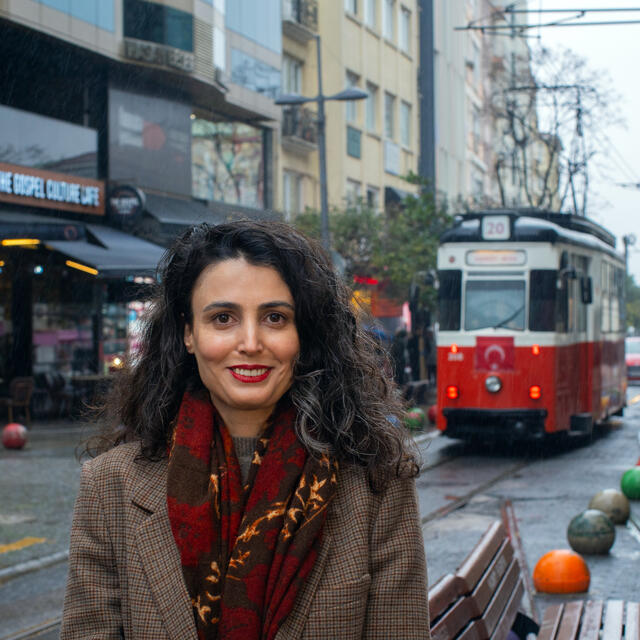
"I am taking the tram today to the shore from Moda. I have a plan to study in the library cafe on the second floor of the ferry station. It’s a small library but the view is astonishing. You can see the Kadıköy peninsula, the ferries and the fishing boats coming in and out, and of course the beautiful Haydarpasha Train Station building. It is closed now after the fire, but once it was the heart of İstunbal – intercity trains arrived there and everyone from Anatolia stepped into İstanbul from that building. It was really heartbreaking for us İstanbullians to watch the fire. Anyway, that cafe will be my window to İstanbul today."
“I love how you can watch the artistic streets of Moda when I am on the tram, and the Bosphorus when I use the ferries.”
"I usually use the tram and the ferries. I love how you can watch the artistic streets of Moda when I am on the tram, and the Bosphorus when I use the ferries. I also like the street musicians on the ferries. Sometimes it turns into a festival inside that ferry. Especially if you travel from Beşiktaş to Üsküdar after a Beşiktaş football match – you can see people chanting, dancing, and singing together. It’s really fun. Those musicians usually choose the most popular songs that almost all people like, and if you have a young group or a joyful middle aged group on that boat, it only takes minutes to see people singing all together. I love those moments, you feel like you belong to your community, you’re having fun together and with strangers – it’s all so heart warming.
"Fun fact, in the late 18th Century, there were special entertainment nights in İstanbul. Especially on full moons, people rented boats to sail in the Bosphorus, usually accompanied by musicians in a boat for a group of 3 or 4 small boats. These nights were called the moonlight nights. They were not only for the rich with sailing yachts but also for the families, the poets, the artists… These nights were a part of the Bosphorus culture. Maybe that culture continues to live with the street musicians on the ferries now."